
I think this might be of interest to some of you.
http://www.lucasmemories.co.uk/site/video/
Joe Lucas.
-
Gibbo2286
- (Donor 2020)
- Posts: 8170
- Joined: 08 Jun 2011, 18:04
- x 2941
Joe Lucas.
Anyone who has never made a mistake has never tried anything new. (Albert Einstein)
-
Peter.N.
- Moderating Team
- Posts: 11778
- Joined: 02 Apr 2005, 16:11
- x 1240
Re: Joe Lucas.
Very interesting that. My earliest recollection of Lucas was in the mid '50s when it was made compulsory for all cars to have two rear lights, then later flasher kits were introduced to replace trafficators, they must have made a fortune.
Peter
Peter
-
CitroJim

- A very naughty boy
- Posts: 54969
- Joined: 30 Apr 2005, 23:33
- x 8309
Re: Joe Lucas.
Thanks for posting that Gibbo, enjoyed...
Good to see a site dedicated to the Prince of Darkness and the conjurer of magic smoke!
Good to see a site dedicated to the Prince of Darkness and the conjurer of magic smoke!
Jim
A bit of a Citroen AX fan...
A bit of a Citroen AX fan...
-
white exec
- Posts: 7445
- Joined: 21 Dec 2015, 12:46
- x 1751
Re: Joe Lucas.
Great post, Gibbo. Will dip into it later. As a boy, I used to cycle past their Acton offices and works on the Uxbridge Road/Acton Vale regularly. Not all of their products were terrific, though...
Chris
-
Peter.N.
- Moderating Team
- Posts: 11778
- Joined: 02 Apr 2005, 16:11
- x 1240
Re: Joe Lucas.
Their batteries were never very good but they had the market for most all other electrical equipment.
Peter
Peter
-
van ordinaire
- (Donor 2017)
- Posts: 2537
- Joined: 23 Jun 2015, 14:45
- x 402
Re: Joe Lucas.
Now I've had a few '50' cars & they all had 2 rear lights [Standard 8/10's uniquely (I think) only had a central brake light - but, somewhat perversely, flashing indicators] & some had indicators from before amber rear ones became mandatory. None of these changes were retrospective though, but flasher conversions were popularb but really only as accessories.
Citroens:-
'81 2CV Club
'05 C15
'97 Xantia Exclusive estate
others:-
Jeep XJ Cherokees x 3
'96 Cadillac Eldorado
'99 Cadillac STS
& the numerous "abandoned projects"
'81 2CV Club
'05 C15
'97 Xantia Exclusive estate
others:-
Jeep XJ Cherokees x 3
'96 Cadillac Eldorado
'99 Cadillac STS
& the numerous "abandoned projects"
-
Peter.N.
- Moderating Team
- Posts: 11778
- Joined: 02 Apr 2005, 16:11
- x 1240
Re: Joe Lucas.
I think that it was only pre war cars that had one tail light, usually at one end of the number plate and there were quite a few of those still about in the '50s, my first one was a '39 Ford Prefect - dreadful car, but any car was a luxury in those days.
Peter
Peter
-
Gibbo2286
- (Donor 2020)
- Posts: 8170
- Joined: 08 Jun 2011, 18:04
- x 2941
Re: Joe Lucas.
I did a lot of conversions at that time, there were quite a few models that didn't comply when two rears became compulsory, most were replaced with the round Lucas stop and tail set up. we didn't have the luxury of hole cutters so drilled them with the biggest drill we had then filed the rest out, I did a lot of filing 
Some of the cars which already had two lamps also didn't comply, the lamps were fitted at each end of the number plate and the law said they had to be at a measured distance from the outside of the car.
Some of the cars which already had two lamps also didn't comply, the lamps were fitted at each end of the number plate and the law said they had to be at a measured distance from the outside of the car.
Anyone who has never made a mistake has never tried anything new. (Albert Einstein)
-
van ordinaire
- (Donor 2017)
- Posts: 2537
- Joined: 23 Jun 2015, 14:45
- x 402
Re: Joe Lucas.
True there were plenty of pre-war cars around, well into the '60's, but I thought the suggestion was that there were '50's cars (as opposed to cars in the '50's) that only had one tail light BUT even now they are not required to comply with later regulations - there is even a "daylight use only" MoT exemption for vehicles that weren't required to have ANY lights when they were first registered.
Citroens:-
'81 2CV Club
'05 C15
'97 Xantia Exclusive estate
others:-
Jeep XJ Cherokees x 3
'96 Cadillac Eldorado
'99 Cadillac STS
& the numerous "abandoned projects"
'81 2CV Club
'05 C15
'97 Xantia Exclusive estate
others:-
Jeep XJ Cherokees x 3
'96 Cadillac Eldorado
'99 Cadillac STS
& the numerous "abandoned projects"
-
Peter.N.
- Moderating Team
- Posts: 11778
- Joined: 02 Apr 2005, 16:11
- x 1240
Re: Joe Lucas.
I don't remember any '50s cars with only one tail light, certainly not among the mass produced cars of the time but there may well have been with some of the small firms that carried over pre war production. A couple of the earliest post war cars were the Morris Minor and Austin A40, they both came out in 1949 but they had 'conventional' lamps.
Peter
Peter
-
white exec
- Posts: 7445
- Joined: 21 Dec 2015, 12:46
- x 1751
Re: Joe Lucas.
My 1935 Rover 10 was fitted with a pair of 9" headlights, boasting a glorious single-filament 37.5W tungsten bulb in each. On main beam, both lamps were lit. When switching to dip, the off-side headlight extinguished, and the near-side reflector tilted (courtesy of an electromagnet) towards the near-side kerb. So, in town at night, you were driving with with 1 x 37.5W of not-too-white light.
Quickly got fed up with this, did a series of mods to the lights, starting with twin-filament flange pre-focus bulbs, and finally to twin-filament halogen. Limiting factor was always the output of the huge Lucas dynamo, capable of all of 22amp!
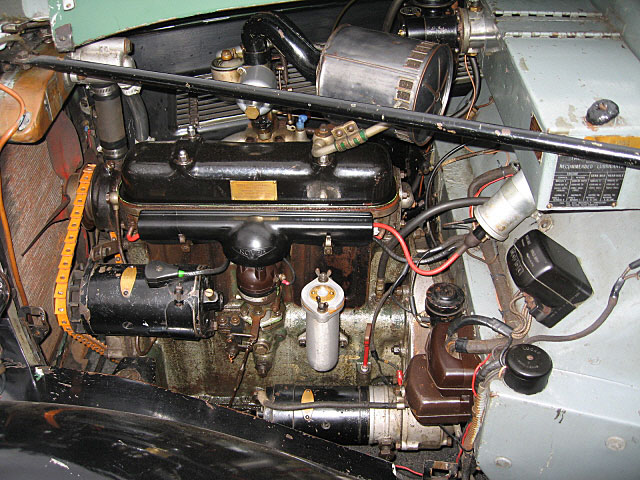
Engine bay of this wonderful old car looked pretty much like this:
Lucas bits everywhere, of course, including the Trafficator semaphore arms:
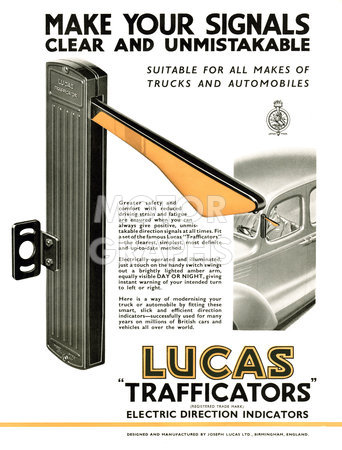
...built into the B-posts...
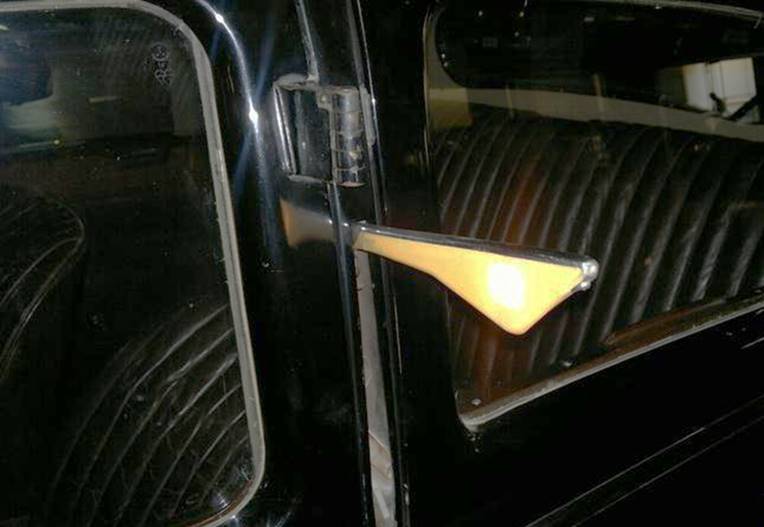
...and operated by a self-cancelling steering column switch (even then! It was a Rover, after all)...
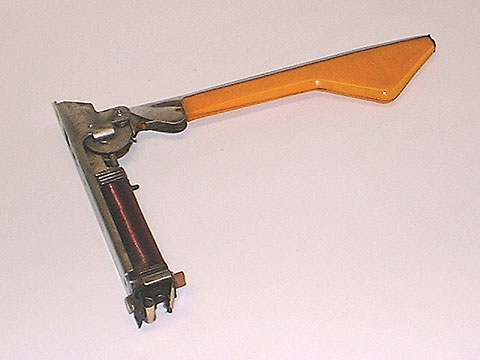
Frequently, the trafficator's electromagnet was too feeble to secure an erection, but a whack to the B-post by the driver would normally do the trick. In high winds, or at Speed (the car could do just over 70mph, just) the indicator arm would frequently get stuck out, even when cancelled. Dropping speed to about 40 would see it slowly subside.
Rest of the pre-war Rover was pretty impressive. This one from 1938:
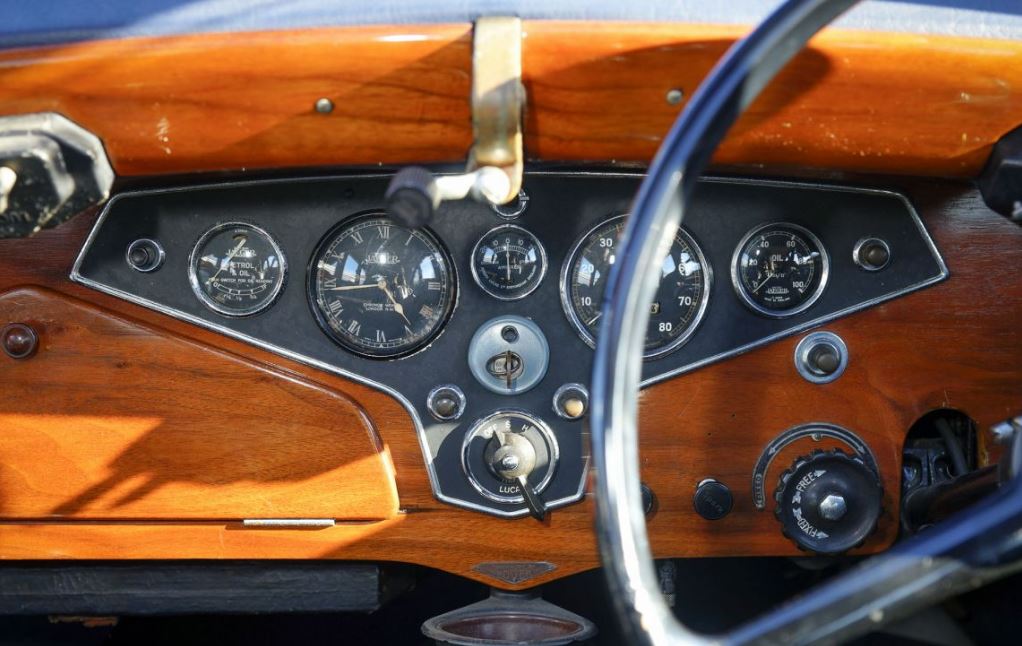
Jaeger instruments right across (still used by Citroen).
Two separate wipe motors (Wipac, IIRC, which, when hot, could drip warm and slightly dirty oil into your lap)
Crank handle for opening windscreen
The button top-left changed the fuel level gauge reading to one for sump-oil
The Jaeger time-clock was clockwork, but electrically wound automatically every few minutes, which could startle a novice driver
The 20-0-20 ammeter gives some idea of the modest capacity of the electrical system
80mph speedo (top speed of the Ten was offically 69mph) and an Oil Pressure gauge (vital, in those days)
The IGN key in the centre:
- turn to left, and press button to start
- turn to right, and the Lucas (!) Startix system would operate: it operated the starter motor automatically, and would run it for a few seconds (or drop out when the engine fired); if the engine stalled while Freewheeling (see below) it would automatically restart the engine. No to be left On while unattended!
A separate manual Choke and Hand Throttle, connected to the SU(s).
And finally, the Rover Patented Freewheel
- When engaged, this allowed clutchless gear-changes up, by automatically disconnecting gearbox output from propshaft, courtesy of a one-way taper-roller centrifugal clutch device. Technique was to lift of the throttle, pause a second or two, and gently move the gear lever up a gear, with no need to touch the clutch. Pressing the accelerator pedal re-engaged the drive, with the car 'freewheeling' when the throttle was lifted off. Saved fuel, yes; in good control, maybe. Good fun when touring lazily. (Down-shifts needed a bit more care: double-declutching was the order of the day on the all-crash four-speed box. You need to be fairly old to know about this.)
Happy days.
Quickly got fed up with this, did a series of mods to the lights, starting with twin-filament flange pre-focus bulbs, and finally to twin-filament halogen. Limiting factor was always the output of the huge Lucas dynamo, capable of all of 22amp!
Engine bay of this wonderful old car looked pretty much like this:
Lucas bits everywhere, of course, including the Trafficator semaphore arms:
...built into the B-posts...
...and operated by a self-cancelling steering column switch (even then! It was a Rover, after all)...
Frequently, the trafficator's electromagnet was too feeble to secure an erection, but a whack to the B-post by the driver would normally do the trick. In high winds, or at Speed (the car could do just over 70mph, just) the indicator arm would frequently get stuck out, even when cancelled. Dropping speed to about 40 would see it slowly subside.
Rest of the pre-war Rover was pretty impressive. This one from 1938:
Jaeger instruments right across (still used by Citroen).
Two separate wipe motors (Wipac, IIRC, which, when hot, could drip warm and slightly dirty oil into your lap)
Crank handle for opening windscreen
The button top-left changed the fuel level gauge reading to one for sump-oil
The Jaeger time-clock was clockwork, but electrically wound automatically every few minutes, which could startle a novice driver
The 20-0-20 ammeter gives some idea of the modest capacity of the electrical system
80mph speedo (top speed of the Ten was offically 69mph) and an Oil Pressure gauge (vital, in those days)
The IGN key in the centre:
- turn to left, and press button to start
- turn to right, and the Lucas (!) Startix system would operate: it operated the starter motor automatically, and would run it for a few seconds (or drop out when the engine fired); if the engine stalled while Freewheeling (see below) it would automatically restart the engine. No to be left On while unattended!
A separate manual Choke and Hand Throttle, connected to the SU(s).
And finally, the Rover Patented Freewheel
- When engaged, this allowed clutchless gear-changes up, by automatically disconnecting gearbox output from propshaft, courtesy of a one-way taper-roller centrifugal clutch device. Technique was to lift of the throttle, pause a second or two, and gently move the gear lever up a gear, with no need to touch the clutch. Pressing the accelerator pedal re-engaged the drive, with the car 'freewheeling' when the throttle was lifted off. Saved fuel, yes; in good control, maybe. Good fun when touring lazily. (Down-shifts needed a bit more care: double-declutching was the order of the day on the all-crash four-speed box. You need to be fairly old to know about this.)
Happy days.
Last edited by white exec on 21 Jun 2016, 16:58, edited 4 times in total.
Chris
-
CitroJim
- A very naughty boy
- Posts: 54969
- Joined: 30 Apr 2005, 23:33
- x 8309
Re: Joe Lucas.
I love trafficators. I remember them well from my childhood....
Jim
A bit of a Citroen AX fan...
A bit of a Citroen AX fan...
-
old-un77
- Posts: 166
- Joined: 25 Nov 2014, 19:58
Re: Joe Lucas.
remember being around 14 years old, and salvaging the trafficator coils to re manufacture shocking coils, and crystalset aerials
-
CitroJim
- A very naughty boy
- Posts: 54969
- Joined: 30 Apr 2005, 23:33
- x 8309
Re: Joe Lucas.
Ahh yes, good uses for them! Wind a lovely coil for a crystal set with the wire...old-un77 wrote:remember being around 14 years old, and salvaging the trafficator coils to re manufacture shocking coils, and crystalset aerials
I did the shocking coil bit and the charging a big electrolytic capacitor as another shocking device.... Oh the innocent fun we had as kids...
Duff electrolytic capacitors used to make a very satisfying bang when chucked on a bonfire too!
Jim
A bit of a Citroen AX fan...
A bit of a Citroen AX fan...
-
old-un77
- Posts: 166
- Joined: 25 Nov 2014, 19:58
Re: Joe Lucas.
Oh! and one time on Coronation Street, there was a storyline......male (not Arthur Lowe?) teaching someone (not deirdre, the other daffy one...) to drive got stopped by a plod, because as was said earlier the law was changed to require 2 tail lights, and this car had only the one.......further he got done for being an "instructor" with a out of date driving licence.......