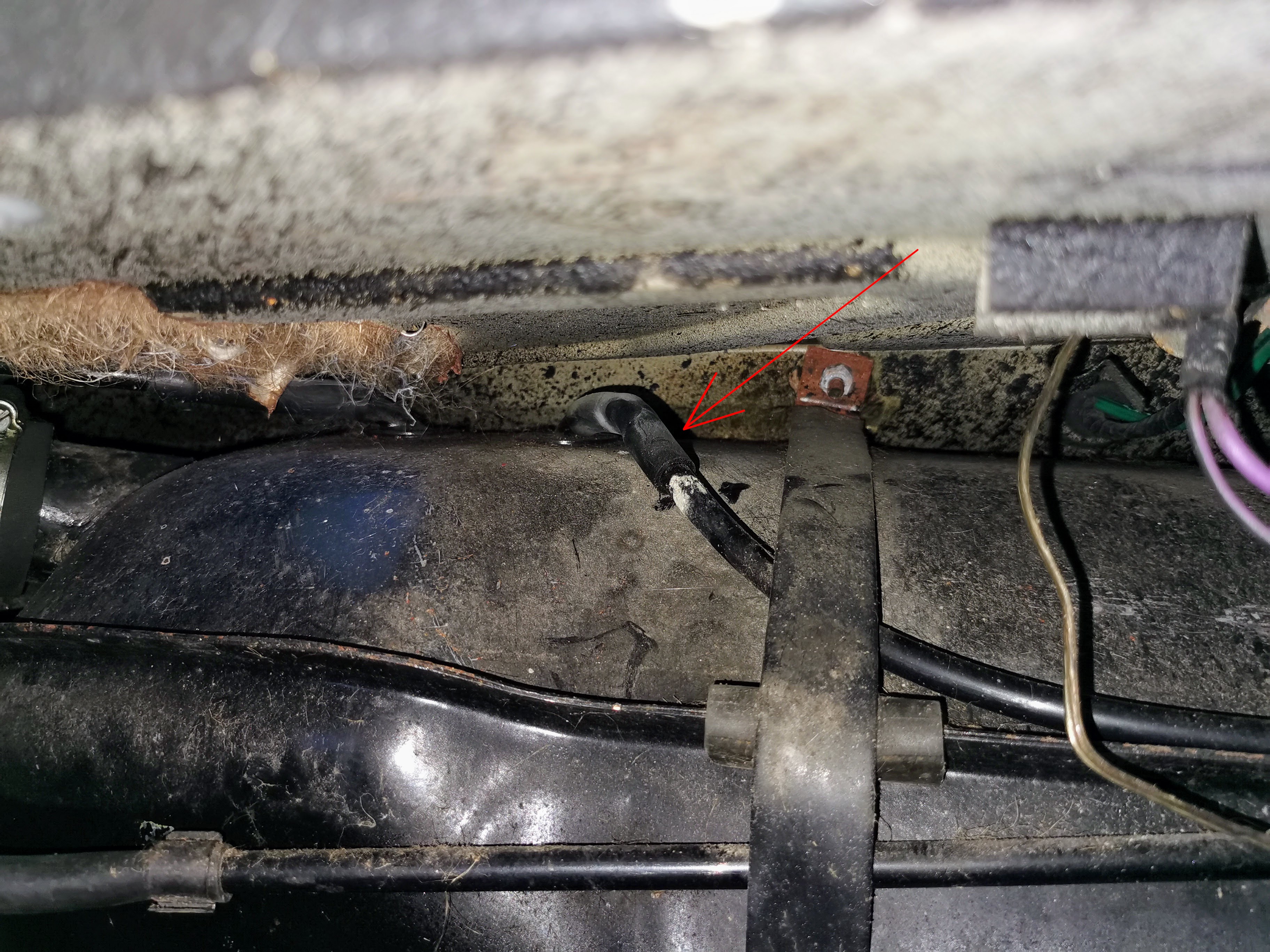
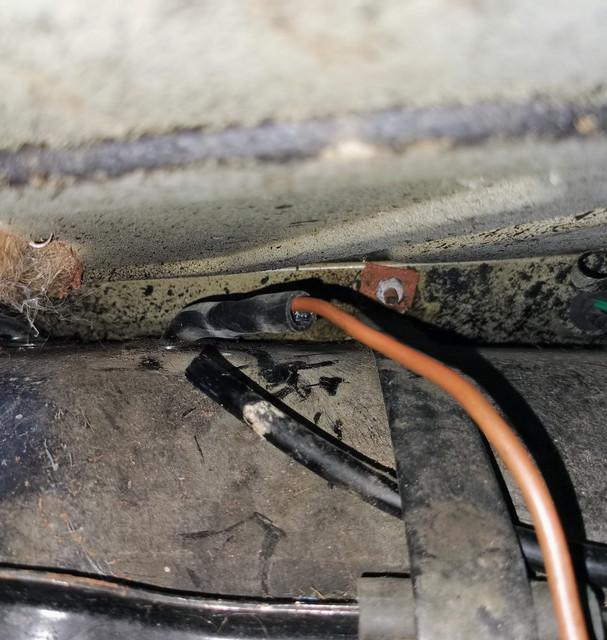
A closer inspection revealed that there are two breather lines attached to the fuel tank in the P6, I'd not spotted the one to the left.
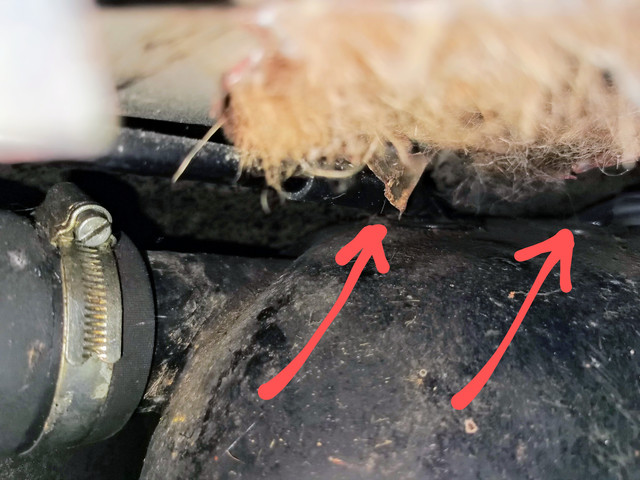
Some quality metal work by whoever put the speakers in evident there too - which I found when I stabbed myself with it.
Turns out that the breather line on the right is blocked somewhere. The tank fitting is fine, but I can neither blow through nor suck through the line which vanishes into the car behind the tank.
The one to the right on the other hand is properly open to both atmosphere and to the tank, so we do have a working tank breather. This arrangement is quite different to the setup shown in my manual, likely as this is a later car. I really need to find a diagram for the later setup as it would be nice to know where these things are actually going.
I think based on the fact that we clearly have one emphatically not working breather, I'm just going to make my life easier and steal the tank port from the clogged one entirely for my return line and to cap that breather line off in case they are connected together elsewhere behind the tank and I unexpectedly wind up with it dumping fuel into the boot.
There's obviously something amiss with the one line so that needs investigating - I think when I go in to change the sender I'll just budget some time to actually pull the tank so I can get to everything in behind there. Wouldn't be the worst idea anyway as I'd like to make sure there's no rust hiding in behind and under there and do what I can to make sure none gets started.
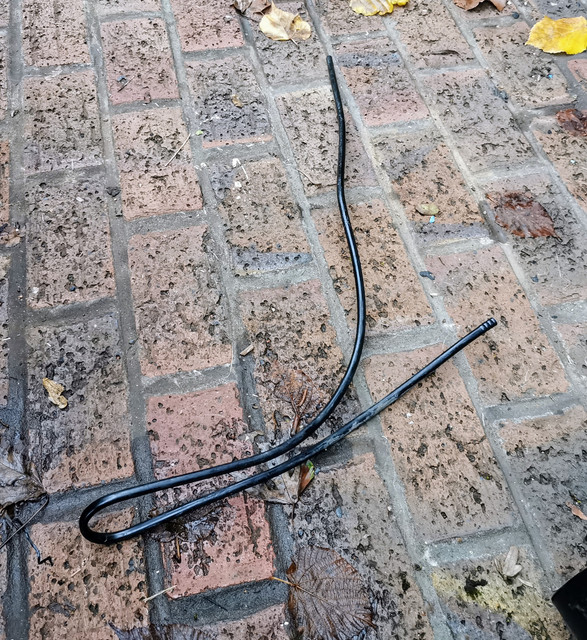
Found this line floating around in the back of my engine bay not attached to anything.
It used to be visible here in the engine bay behind the right hand cylinder head.
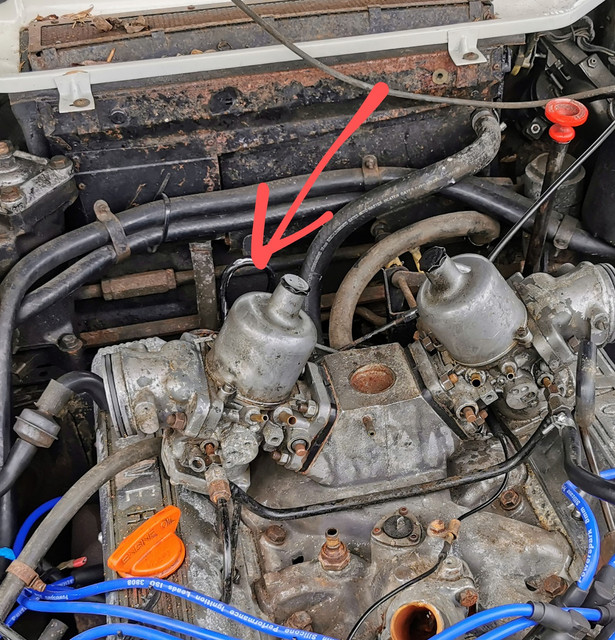
I'd originally thought this was a breather from the gearbox, but apparently not as it was just bundled in among the various pipes running down the side of the bell housing under the car. Answers on a postcard?
Elsewhere under the heading of Zel using ridiculously overkill hardware for mundane tasks, this old time clock has now been given the task of switching the light on my fish tank.
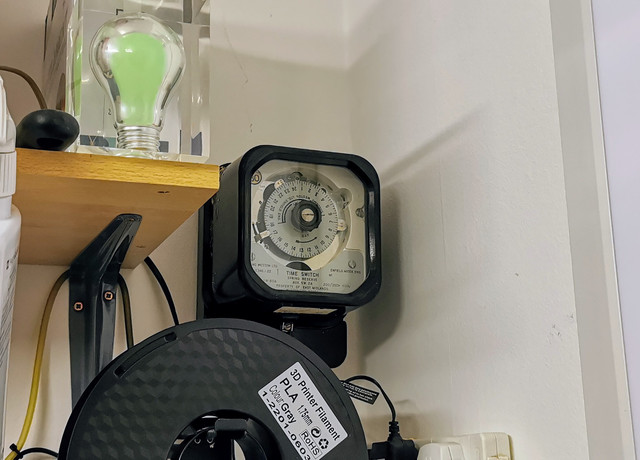
It's rated to 20kW...should be able to deal with the 4W we're dealing with here. I did have a closer look at the innards when I first got it, and looking at the contacts I'm pretty sure it's never been used to actually switch anything. Bit silly, but it pleases the engineer in me to see really nice quality kit getting a second chance at life. Plus I now don't need to remember to turn that light on in the morning - which I've a terrible record for remembering to do.