
7 years ago!Old-Guy wrote:The memory is affected as well!
The 4 corner spheres were replaced 7 years and 25,000 miles ago, and the accumulator sphere 6 years and 20,000 miles ago, but the a/s and centre spheres don't ever seem to have been replaced. The suspension isn't as soft as I had expected. When the engine is running and the doors are closed, bouncing the corners feels much like a standard car - in hard mode, it's HARD. For the moment, I don't want to spend any more money on it than I can help, but the whole reason for buying a Xantia and particularly a VSX is the soft ride.
 Unless they're the multi-layer long life variety (identified by the citroen logo at the top and three dimples spaced around the filler valve at the top) then they will be shot by now, so I'm not surprised it feels hard on a bounce test. A 6 year old accumulator sphere will be shot or nearly so as well.
If you think its going to pass the MOT I would get it through that and then put your feet up for a few weeks as it sounds like you've worked your butt off getting it ready for the MOT... then replace the spheres next month. A full set of IFHS spheres from aepdirect is only about £150, when I got my Xantia V6 last year I just bought the whole set apart from the accumulator sphere which Alex had recently replaced and did all the rest.
By the way as a stop gap measure you can use an accumulator sphere in place of the hydractive regulator/centre spheres if you have any spare ones lying about

A rear hydractive regulator sphere is EXACTLY the same as an accumulator sphere in every way except the pressure is 50 bars instead of 62, so an accumulator sphere that has gone slightly flat is perfect. I put a good (62 bar) accumulator sphere on the rear of my previous Xantia while I was waiting for the correct sphere and the ride was like a Blancmange

The front hydractive regulator sphere is either 70 or 75 bars depending on its size and although they are a slightly bigger sphere with a bigger hole in the neck you could get away with putting an accumulator sphere here for a while as well, certainly if the alternative is to leave a flat or punctured sphere there...
As Jim said, the rear suspension in soft mode should be "lean on it and it bottoms" soft, the front will be stiffer than the rear but still very soft and easy to bounce. With a bit of a push you should still be able to bottom it.Should a corner bounce (in soft mode) even on the front feel really soft and floaty?
Just recall how soft your previous Xantia was with good spheres and it should be 50% softer again roughly in a bounce test in the soft mode.

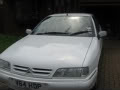



 The 'centre' sphere is exactly where Simon [Mandrake] said.