
hey gang
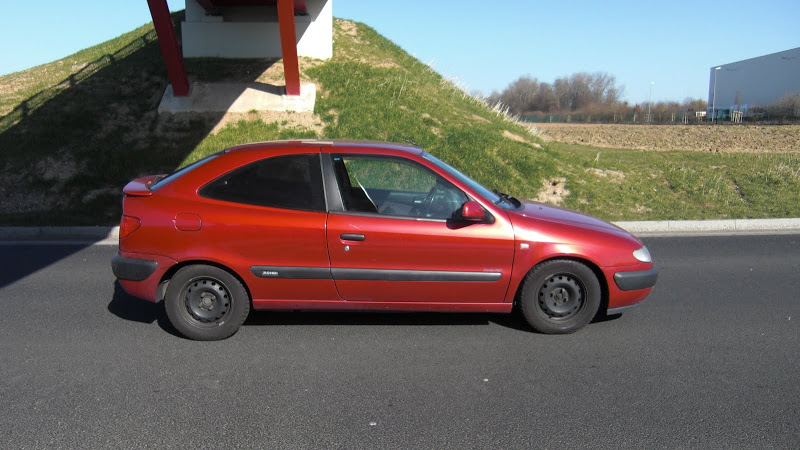
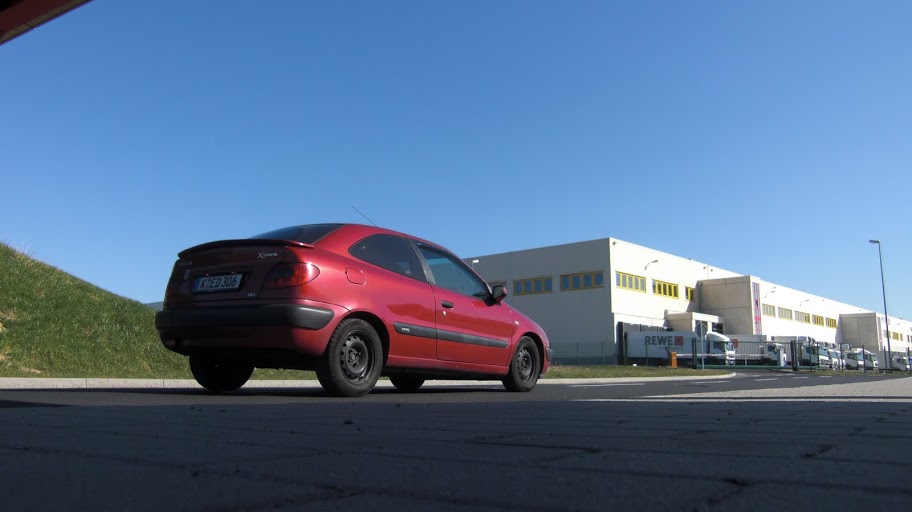
my xsara is lowered 40mm at front and standard at rear, here's a pic of her:
https://picasaweb.google.com/1096236004 ... 7969673794
have a look through the album, some pics make it clearer than others.
ok it may not sound much, but i notice that rain water drips down off roof and onto the windscreen and that says to me that is enough for me to say that when dipping for oil levels, i might be getting an inaccurate reading with her sitting the way she is?
would this be true to say?
must i put car on ramp to dip oil levels accurately?
thanks
ed
reading oil levels with 'dragracing style car
-
Xaccers

- Posts: 7654
- Joined: 07 Feb 2007, 23:46
- x 186
I wouldn't have thought it would make that much of a difference.
1.9TD+ SX Xantia Estate (Cassy) running on 100% veg
1.9TD SX Xantia Hatchback (Jenny) running on 100% veg for sale
Laguna II 2.0dCi Privilege (Monty)
DIY sphere tool
1.9TD SX Xantia Hatchback (Jenny) running on 100% veg for sale
Laguna II 2.0dCi Privilege (Monty)
DIY sphere tool
-
myglaren

- Forum Admin Team
- Posts: 28631
- Joined: 02 Mar 2008, 13:30
- x 5645
-
Kowalski

- Posts: 2557
- Joined: 15 Oct 2003, 17:41
That would depend on how far the dipstick is from the centreline of the sump. The difference between the top and bottom levels on the dipstick isn't huge, all you need is a block of wood 40mm thick for each of the front wheels to stand on while you check your oil level.Xac wrote:I wouldn't have thought it would make that much of a difference.
-
xantia_v6
- Forum Admin Team
- Posts: 10910
- Joined: 09 Nov 2005, 22:03
- x 1438

Easy enough to find out...
Read the oil level on the dipstick, then jack up the front of the car so that the sills are level, then read the oil level again. Compare the results.
I think that most modern engines route the dipstick so that (at the measurement point) it is near the center line of the engine to minimise such issues.
Read the oil level on the dipstick, then jack up the front of the car so that the sills are level, then read the oil level again. Compare the results.
I think that most modern engines route the dipstick so that (at the measurement point) it is near the center line of the engine to minimise such issues.
-
dnsey
- Posts: 1538
- Joined: 20 Oct 2004, 01:39
- x 19
If you find that it does make a difference, I'm sure there's a nearby hill of the necessary gradient where you could stop to check your oil every now and then.
However, if it makes that much difference, you'll need to consider what's the 'correct' level - after all, depending on the position of the oil pump pickup, you might possibly run into oil starvation before it reaches the 'low' mark on the dipstick. In practice, I very much doubt that that would happen, but the angle might perhaps have an effect on the splash lubrication side of things, particularly as the designers would have expected the oil in the sump to be thrown towards the rear under acceleration, and only towards the front when the engine's not under load.
However, if it makes that much difference, you'll need to consider what's the 'correct' level - after all, depending on the position of the oil pump pickup, you might possibly run into oil starvation before it reaches the 'low' mark on the dipstick. In practice, I very much doubt that that would happen, but the angle might perhaps have an effect on the splash lubrication side of things, particularly as the designers would have expected the oil in the sump to be thrown towards the rear under acceleration, and only towards the front when the engine's not under load.