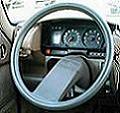
I tried to answer this yesterday, but a dreaded 'puter lock up' foiled me, so I'll try again.
I'm an old CX tragic from way back. I've owned 2200 manual 4 speed, 2400 manual 5 speed, 2.5 Gti manual and a 2400 C-matic, so I've done a lot of miles in them.
Best by far was the c-matic which was the top 3 gears of a 4 speed transmission driven through a torque converter and operated via an electrovalve solenoid to control fluid to the t/c.
On a trip, that car would get around 8.7litres/100 klms (33 mpg) but around town 11L/100 klms (25mpg) was a push.
Ride was good to excellent, brakes unbelieveable, handling whilst good, needed a bit of getting used to (door handles almost rubbing the road in fast tight corners takes a bit of getting used to)

only car I've ever seen that can blow a tyre out and the first indication you get that it's blown is when the shredded rubber hits under the guards and the only car I've ever seen that you could fling off tarmac onto gravel at 150 kph (when a Police car was doing a U turn across double white lines just over the crest of a hill)

and still stay fully under control.
Seats are better than most high priced lounges, particlarly the rear seat; I drove the C-matic 1300+ klms from Sydney with a 6'4" son in the rear who refused to sit in the front because he was so comfy in the rear.
The old series 1 2400 pushrod engine was bombproof. I once asked for a price to get one rebuilt and couldn't get one because nobody out here had ever heard of anyone needing to do one. At the time, mine had around 560,000 klms on it so I thought it might be getting close.
Living out here, I was somewhat amused to see the comment about heating, as it had the reputation over here of being possibly one of the hottest cars ever made, so shows the difference climates can make. Here we don't bother with the air/con in most cases as it just does not work unless you're prepared to spend a fortune insulating etc, so with mine, I just tore it out to give a bit more underbonnet space.
Agree with Anders; electrics are a nightmare on them with a combination of too light a gauge of wire used coupled to the habit of repairers to stick bits in here and there instead of replacing decent lengths.
Repairs aren't all that common and if you're going to pay someone to do them for you, you'll need a trusted repairer and a big bank balance. If you are a DIYer, then forget shortcuts; there are none, yet most times the long way is the quickest.
When it comes to doing anything on the drive train as Anders says, it all has to come out which isn't all that big a deal as we've had the lot out within 2 1/4 hours, but if this is ever necessary, then make life easy on yourself and do a full check over while it's there. We did gaskets seals and clutch as well as sorting all the hard to get at wires and hydraulics, new engine mounts and a general clean up of the engine bay. It will then last you for years before nything else needs doing and would be one magic motor car.
Rust is a major problem and again, nothing in half measures. All out, cleaned up rust properly removed and paint wherever you can get it.
Living where they salt roads in winter, there's no way I would venture out when that was going on or you might end up with what they call a a "Disprin car." (ie) Leave overnight in water and it's dissolved in the morning.


Alan S